
If a tree on your Sylmar property is leaning further than it used to, dropping large limbs without warning, or showing soft, crumbling bark near the base, it likely needs to come down before the next Santa Ana wind event, not after. Waiting to schedule hazardous tree removal in Sylmar until a storm or a structural failure forces the issue is one of the most common, and costliest, mistakes property owners make. At Dario Tree Trimming, our crews get called out for the same handful of warning signs again and again, and catching them early is almost always safer and less stressful than an emergency cleanup after a tree has already come down on a fence, a roof, or a car.
Sylmar’s terrain makes this especially important. Steep hillside lots, variable soil conditions, and foothill wind corridors all put extra stress on mature trees. Here are the five signs that tell us, and should tell you, removal isn’t optional anymore.
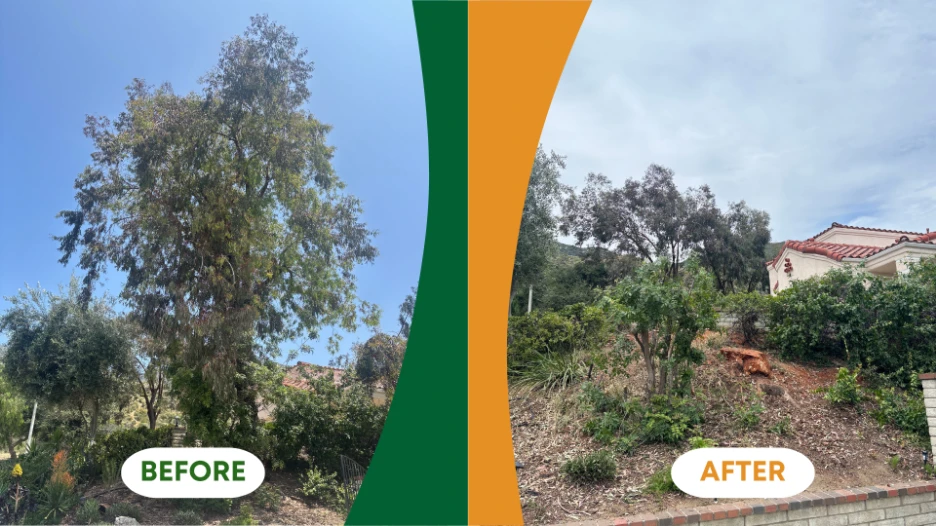
Sign 1: Large Dead or Hanging Branches Throughout the Canopy
A little deadwood at the tips is normal after a dry summer. But when large limbs in the upper canopy are bare while lower branches stay green, that usually signals drought stress, root damage, or decay working down from the top. The USDA Forest Service notes that widespread crown dieback is one of the clearest visual indicators of structural decline, since it often means the root system can no longer support the whole canopy.
Homeowners searching for dead tree removal near me are frequently describing this exact pattern: a tree that still looks alive from a distance but sheds branches with no wind at all. In a neighborhood like Sylmar, where trees sit close to driveways, patios, and power lines, a single large branch failure can cause real damage in seconds.
Sign 2: A Trunk That’s Leaning More Than It Used To
Some trees naturally grow with a slight lean toward sunlight, and that isn’t automatically dangerous. What matters is a sudden or worsening lean, especially one paired with soil lifting or cracking on the opposite side of the trunk, a sign the root plate is tearing loose from the ground rather than the tree simply bending.
This calls for a professional leaning tree risk inspection rather than a guess from the driveway. An arborist checks root plate movement, lean angle, and internal wood condition to determine whether a tree can be stabilized or needs to come down. The International Society of Arboriculture’s consumer resource, Trees Are Good, lists lean angle and root plate integrity among the core factors in any formal tree risk assessment.
Sign 3: Root Damage, Heaving Soil, or Exposed Roots Near the Base
Roots are a tree’s anchor, and anything that disturbs them, trenching, foundation work, grading, or a recent hardscape project, can compromise stability years later. Watch for cracked concrete near the base, soil that has visibly lifted, or mushrooms and shelf-like fungal growth (conks) growing directly out of the trunk or surface roots. Fungal growth, including mushrooms or other fruiting structures near the base of a tree, can be a warning sign of internal decay. The University of California Statewide IPM Program identifies Armillaria root rot as a serious disease affecting trees and woody plants in California landscapes, with symptoms including decline, dieback, and fungal growth around infected trees.
Sign 4: Cavities, Cracks, or a Hollow Sound When You Tap the Trunk
A visible cavity, long vertical crack, or signs of decay can point to internal structural problems that require professional evaluation. Although some homeowners rely on the “hollow sound” test, the exterior of a tree doesn’t always reveal how much healthy wood remains inside. These trees can look healthy in the canopy while carrying almost no real strength at the base, part of why they’re so dangerous. This risk isn’t unique to Sylmar; homeowners across the region often need emergency tree removal in San Fernando Valley communities where older, drought-stressed trees share the same climate and soil conditions. A trained eye, not a visual guess, is the only reliable way to tell a cosmetic scar from a structural failure waiting to happen.
Sign 5: Multiple Warning Signs Together Point to Hazardous Tree Removal in Sylmar
Any single sign above is worth a professional look. But when two or three show up on the same tree, deadwood plus a new lean, or a cavity plus heaving soil, the odds of sudden failure rise sharply, and waiting stops being reasonable. This is exactly why hazardous tree removal in Sylmar should always start with a proper risk assessment rather than a guess based on how a tree looks from the street. It also matters for wildfire safety: Cal Fire’s defensible space guidelines recommend removing dead or dying vegetation near structures, since dry vegetation and dead plant material can contribute to wildfire fuel around structures.
What Dario Tree Trimming Looks for During an Assessment
Every property and tree is different, which is why removal is never recommended from a single symptom alone. A typical assessment looks at species, lean angle, root condition, canopy health, and proximity to structures. Removal is always the last option, not the first one offered.
Frequently Asked Questions
How quickly should I act once I notice one of these signs? It depends on severity, but a tree with multiple red flags, such as a new lean combined with root heaving, should be inspected promptly, not weeks, especially before a forecasted wind event.
Can a leaning tree ever be saved instead of removed? Sometimes. Cabling, bracing, or root zone repair can stabilize certain trees, but only after an inspection confirms the root plate and trunk are sound enough to support it.
Does the City of Los Angeles require a permit to remove a tree in Sylmar? Native and protected tree species may require a permit through the Los Angeles Department of Building and Safety, so it’s worth confirming a tree’s species and status before removal begins.
Is emergency removal more expensive than planned removal? Often, yes. Emergency situations can involve after-hours work, crane access, or storm-damage cleanup, which is part of why early inspection tends to save money over time.
Ready to Stop Wondering and Start Knowing? Your Sylmar Tree Deserves a Real Answer
If any of these five signs sound familiar, the safest next step isn’t to wait and see what happens in the next windstorm, it’s to get a professional set of eyes on the tree. Dario Tree Trimming has spent years assessing trees across Sylmar’s hillsides and neighborhoods, and we’ll always give you a straight answer about whether a tree can be saved or whether it’s genuinely time for hazardous tree removal in Sylmar. No pressure, no upsell, just a clear, honest recommendation so you can make the right call for your property. Reach out to Dario Tree Trimming today to schedule an inspection before a small warning sign turns into an emergency.
