
Regular tree trimming in Sylmar helps reduce windstorm-related property risks by removing weak limbs, improving canopy balance, and limiting branches that may strike roofs, fences, vehicles, or walkways. For Sylmar homeowners, this matters because local trees often face a mix of San Fernando Valley heat, dry soil, foothill wind exposure, and wildfire defensible space concerns. A well-maintained tree is better positioned to handle strong gusts because its structure is lighter, cleaner, and easier for wind to move through.
Windstorms can make small tree issues more noticeable very quickly. A branch that looked manageable during calm weather may shift, crack, or fall when heavy gusts move through hillside areas and older residential neighborhoods. What homeowners often don’t realize is that wind damage is not always caused by the strongest storm. In many cases, it happens because a tree already had hidden weaknesses, dense overgrowth, deadwood, or poor branch structure before the wind arrived. This is why regular trimming should be viewed as part of responsible property care, not just seasonal cleanup. A professional evaluation helps determine what should be trimmed, what should remain, and how the tree can be cared for safely.
How does regular tree trimming protect your property during windstorms?
Regular trimming helps reduce weak, dead, or overloaded branches before strong winds arrive. It improves airflow through the canopy, supports better branch balance, and lowers the chance of limbs striking nearby structures. It also helps homeowners identify tree health concerns early, before wind exposure makes them more serious.
Why Windstorm Risk Matters for Sylmar Homes
Sylmar sits in a part of the San Fernando Valley where trees are exposed to heat, dry periods, and strong seasonal winds. Many homes are also located near foothill properties, slopes, retaining walls, tight side yards, and mature shade trees that have grown close to structures over time. These conditions can make wind-related tree care more complex than it appears from the ground.
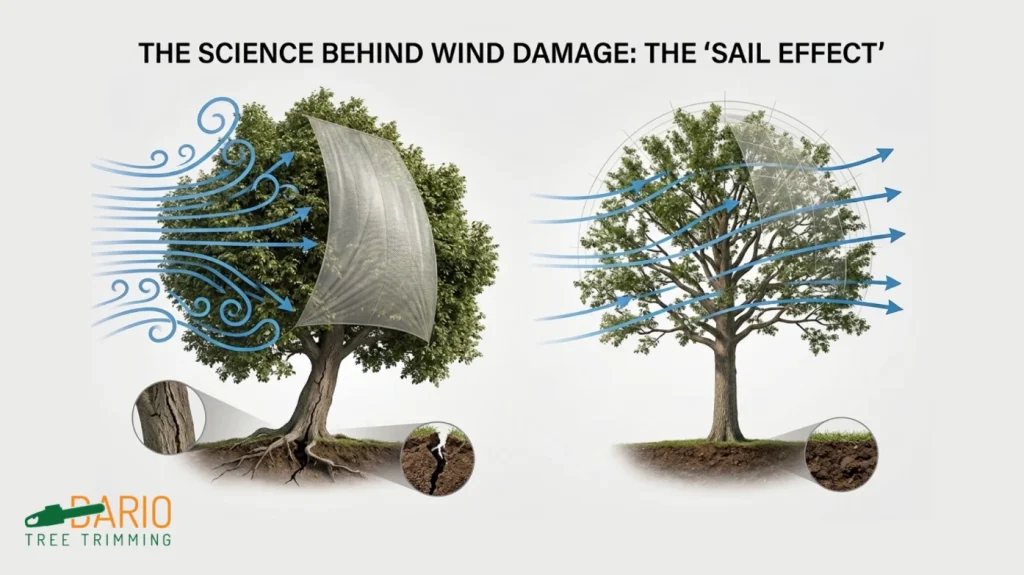
When a tree goes untrimmed, its canopy becomes dense and packed with foliage. During a windstorm, this dense mass acts exactly like a ship’s sail, catching the full force of the wind rather than letting it pass through safely. This extreme aerodynamic drag puts immense mechanical stress on the trunk and root system, frequently resulting in catastrophic uprooting or major limb failure.
This is where storm preparation tree care becomes important. The goal is to identify what creates unnecessary weight, resistance, or risk. In many cases, thoughtful trimming can help the tree keep its natural shape while reducing the conditions that make storm damage more likely.
How Tree Trimming in Sylmar Reduces Windstorm Damage
Wind-focused tree pruning is a strategic process. It requires selective, precise cuts that preserve the health of the tree while eliminating structural hazards.
Removing Dead or Weak Branches
Dead limbs are one of the most common concerns before high winds. These branches are already brittle and can break without much force. Removing them helps reduce loose material in the canopy and supports falling branch prevention around homes, driveways, and outdoor gathering areas.
Improving Canopy Airflow
By carefully removing a small percentage of interior branches, a certified specialist improves airflow through the canopy. This significantly reduces wind resistance while leaving enough foliage to protect the tree’s bark from sun scald during the hot summer months.
Balancing Heavy Growth
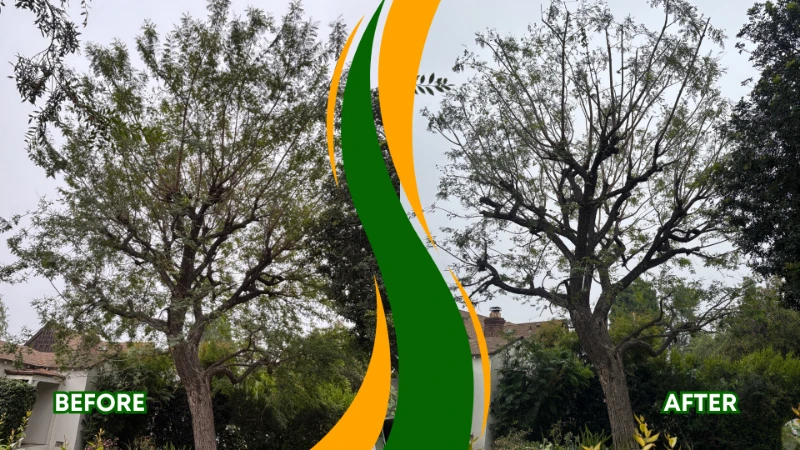
Uneven growth can place more weight on one side of the tree. During strong winds, that imbalance can increase stress on certain limbs or trunk connections. In many cases, tree trimming in Sylmar is used to reduce excessive weight while preserving the tree’s structure and appearance.
Creating Safer Clearance
Branches growing too close to roofs, fences, windows, utility areas, or neighboring properties should be evaluated before wind season. Trimming can help create safer clearance while reducing the chance of branches scraping, striking, or dropping onto nearby surfaces.
What Homeowners Should Look for Before Strong Winds
Homeowners do not need to diagnose every tree issue on their own but knowing what to look for can help them decide when to schedule an evaluation.
Deadwood in the Canopy
Look for branches without leaves, brittle tips, or broken pieces caught in the tree. Deadwood should be addressed carefully because it can fall unexpectedly, especially during gusty weather.
Large Limbs Over Structures
Branches over roofs, vehicles, fences, patios, or walkways deserve closer attention. Not every overhanging limb must be removed, but its condition, size, and attachment point should be reviewed.
Cracks, Splits, or Hanging Branches
A cracked limb or partially broken branch may shift during wind. These situations should not be handled as a DIY project, especially if the branch is under tension or located above a structure.
Dense or Overgrown Canopies
A full canopy can look healthy, but excessive density may increase wind resistance. This is where storm preparation tree care can help determine whether thinning, reduction, or structural trimming is appropriate.
Branches Growing Too Close Together
Crowded branches can rub against each other, creating wounds that may become weaker over time. Selective trimming can improve spacing and support long-term branch structure.
Previous Poor Cuts
Old topping cuts, large stubs, or uneven trimming can affect how a tree grows. These areas may develop weak regrowth that is more likely to break. Identifying these patterns supports better falling branch prevention before wind exposure increases.
How Local Conditions Affect Tree Stability
Tree trimming decisions in Sylmar should reflect the local environment. A tree in a flat, open yard may need a different approach than a tree on a slope, near a retaining wall, or close to a narrow side yard.
Foothill Wind Exposure
Properties near hillside areas may experience stronger gusts or shifting wind patterns. Trees in these areas often need careful canopy management to reduce unnecessary weight and improve balance.
San Fernando Valley Heat
Heat stress can affect how trees respond to trimming. Removing too much foliage at once can expose branches to sun damage. A measured approach helps protect the tree while still addressing structural concerns.
Mature Trees in Older Neighborhoods
Older residential areas often have large shade trees that provide cooling and curb appeal. These trees may also have long limbs, previous cuts, and close proximity to homes.
Wildfire Defensible Space Concerns
Sylmar homeowners may also think about dry vegetation and fire-conscious property care. CAL FIRE defines defensible space as the buffer between a structure and surrounding vegetation, and its guidance includes clearing dead or dry vegetation and creating space between trees and shrubs to reduce available fuel. California defensible space requirements also reference horizontal and vertical spacing among shrubs and trees. This is another reason storm preparation tree care should be specific to the property. Tree trimming can help reduce deadwood and low-hanging branches when appropriate, but it should still be done in a way that supports tree health.
Tree species also affects how trimming should be handled. Ficus can become dense and heavy, eucalyptus may need careful structural evaluation, pines should not be over-thinned, and palms, olive trees, and liquidambar trees each require timing and technique suited to their growth patterns.
FAQs
Question: How does regular tree trimming help protect a property during windstorms?
Answer: Regular tree trimming helps reduce windstorm-related risks by removing dead, weak, or overloaded branches before strong winds arrive. It can improve airflow through the canopy, reduce excessive branch weight, and create safer clearance around roofs, fences, driveways, and walkways.
Question: How often should Sylmar homeowners trim trees for wind safety?
Answer: The right schedule depends on the type of tree, growth rate, condition, and property layout. Some trees may need seasonal attention, while others may only need periodic structural trimming. In Sylmar, wind exposure, dry soil, hillside locations, and mature trees near structures can influence how often professional trimming is recommended.
Question: What signs show a tree may need trimming before strong winds?
Answer: Signs may include dead branches, cracked limbs, heavy overgrowth, branches touching roofs or fences, uneven canopy weight, or limbs hanging over driveways and walkways. A tree may also need attention if it has old improper cuts, visible decay, or branches rubbing together.
Question: Can tree trimming prevent all storm damage?
Answer: No tree service can prevent all storm damage because wind conditions, soil movement, tree health, and unexpected weather can vary. However, regular trimming can reduce avoidable risks by addressing weak limbs, excess canopy weight, and clearance concerns before severe wind conditions occur.
Question: Why is local experience important for windstorm tree care in Sylmar?
Answer: Local experience matters because Sylmar properties often face specific conditions, including San Fernando Valley heat, foothill wind exposure, dry soil, sloped lots, retaining walls, tight side yards, and wildfire defensible space concerns. A local tree care provider can evaluate how those conditions affect each tree and recommend a practical trimming plan.
Before the Winds Pick Up, Let Dario Tree Trimming Help You Protect What’s Around Your Trees
Before wind becomes a concern, it helps to know whether your trees are carrying extra weight, dead branches, or structural issues that should be addressed. At Dario Tree Trimming, we help Sylmar homeowners take a clear, careful look at their trees before problems become harder to manage. If you are considering tree trimming in Sylmar, we can evaluate your property, explain what we see, and recommend trimming that supports safety, structure, and long-term tree health. Call Dario Tree Trimming today to schedule an evaluation and get practical guidance before the next round of strong winds.
