
Tree trimming vs pruning comes down to the purpose behind each cut. Trimming usually handles clearance, size, or an outside boundary. Pruning selects particular branches to improve structure, remove deadwood, or guide future growth. Both use saws and ropes, but they should not begin with the same instructions.
Before fire season, trimming may separate branches from roofs, chimneys, or neighboring plants. Pruning may remove dead limbs or correct branches that carry weight poorly. Removal is a separate decision. It belongs after inspection shows that selective cuts cannot reasonably address the condition.
For Sylmar homeowners, start with a physical question. Is the branch touching tile, loading one side, shading fruiting wood, or connecting brush to the canopy? Name that problem first. Then choose the cut.
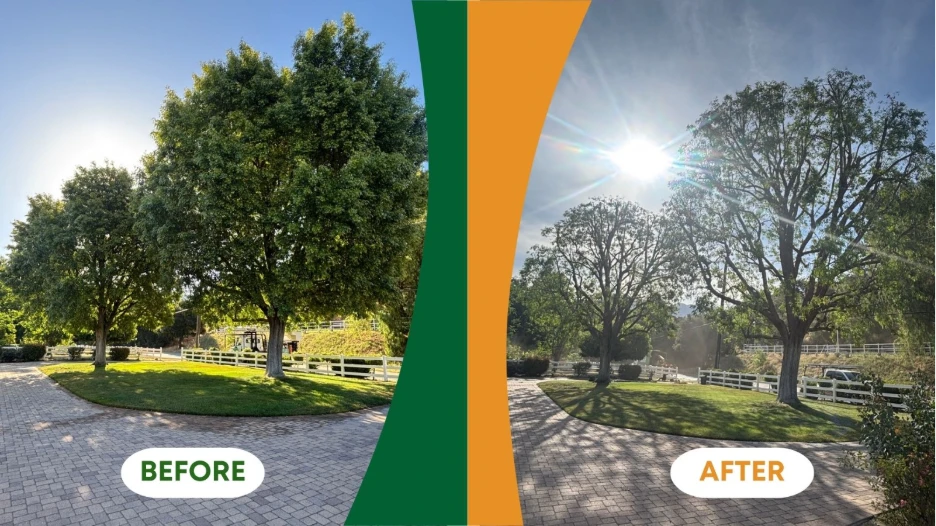
Are Tree Trimming and Pruning Really Different?
A written plan may translate ‘trim it back’ into crown cleaning, raising, or reduction. Cleaning removes selected dead or weak growth. Raising creates clearance below. Reduction shortens height or spread through suitable lateral branches.
Trimming often describes an outside result. Branches are moved away from a roof, driveway, chimney, sidewalk, fence, or neighboring canopy. The tree may also need its spread reduced because growth has outpaced the available space.
Pruning describes the reason behind each selected cut. Deadwooding removes dead branches. Structural pruning addresses weak unions, competing stems, or limbs carrying too much weight at their ends.
The International Society of Arboriculture says no branch should be removed without a reason. Its mature-tree guidance distinguishes cleaning, raising, and reduction while warning that routine thinning does not automatically improve health.
If the goal is only “make it smaller,” the plan is incomplete. Which branch creates the conflict? Where should the remaining branch take over? How much living canopy can this tree reasonably lose?
What Does Tree Trimming in Sylmar Usually Solve?
Tree trimming in Sylmar often begins with a physical conflict. A limb scrapes roofing during wind, blocks a driveway, hangs over pool equipment, or reaches across a fence line.
Clearance does not mean cutting every branch back to the same outline. The crew follows each limb toward a suitable lateral branch, then makes the cut outside the branch collar. That approach preserves a natural path for future growth.
Fire-adjacent properties add fuel management to the plan. CAL FIRE recommends removing dead material, separating vegetation layers, and keeping branches away from chimneys. The agency also notes that spacing changes with plant size and slope.
That matters north of Foothill Boulevard, where hillside grades can change the needed separation. A flat-yard spacing rule should not be copied blindly onto a steeper lot.
The UC Agriculture and Natural Resources Fire Network makes another important point. A healthy green canopy is not automatically a fire concern. Branches over roofs can still drop debris into gutters, so the correct response may be targeted clearance.
When Is Pruning the Better Description?
Tree pruning in Sylmar is the better description when tree biology drives the decision. The arborist is choosing branches because of attachment, condition, load, direction, or future structure.
A young tree may need a competing stem shortened before both leaders become heavy. A mature tree may need deadwood removed without opening every interior branch.
Each cut changes how the tree distributes weight and grows around the wound. A flush cut damages the branch collar and can injure trunk tissue. Leaving a long stub creates another poor path for closure.
Large limbs require a sequence. The crew reduces the limb’s weight first, removes the remaining section, then finishes outside the collar. That sequence helps prevent falling bark from tearing down the trunk.
This is where professional tree care becomes visible. The proof is not a rounded canopy from the curb. It is the branch selected, the cut location, and the structure left behind.
More Cutting Does Not Mean More Care
Mature trees do not benefit from routine thinning simply because the canopy looks dense. ISA guidance says removing foliage can reduce growth and stored energy. Heavy pruning can also stress the tree.
Topping creates a different problem. Large branches are cut without a suitable lateral branch ready to take over. The tree often responds with clusters of new shoots attached near the wound.
Those shoots can grow quickly without rebuilding the original structure. A short-looking tree can therefore return with dense growth and weaker attachments.
Ask what the cut is meant to accomplish. Ask what branch will carry growth afterward. If nobody can answer either question, the work plan needs another look.
How Much Can Be Removed During One Visit?
Pruning dose depends on species, age, condition, and objective. Younger trees usually tolerate more live-tissue removal than mature trees. A stressed tree may need an even lighter plan.
ISA guidance gives a general ceiling of 25 percent of the crown at once, with less for mature trees. That figure is a limit, not a target.
Removing foliage also removes the tree’s energy-producing surface. Heavy thinning can expose interior limbs and stimulate regrowth without solving the original conflict.
Ask for the minimum cut that meets the objective. More daylight through the canopy does not automatically mean better structure or lower maintenance.
When Should the Work Be Scheduled?
Timing follows the species and the reason for pruning. Dead, broken, or dangerous branches may require prompt attention. Planned live-branch work offers more flexibility.
ISA notes that light routine pruning can occur throughout the year. Heavy live-tissue removal just after spring growth can stress weaker trees that recently spent stored energy.
Flowering habits matter too. University of California guidance places many spring-flowering trees after bloom. Other species may fit dormant-season work better.
Do not choose a month from a generic calendar. Identify the species, objective, and amount of live growth first.
Questions Homeowners Often Ask After the Estimate
Should pruning cuts be painted or sealed?
Usually, no. ISA guidance says wound dressings do not speed closure or reliably prevent decay. The better protection is a correctly placed cut that preserves the branch collar.
Can pruning make a tree safe during every windstorm?
No. Pruning can reduce specific defects or loads, but no living tree becomes risk-free. New damage or soil movement may require another inspection.
Can I trim a protected tree for fire clearance?
Fire clearance and protected-tree rules must be handled together. Confirm the species and required work before making major cuts. A notice does not erase Los Angeles protections.
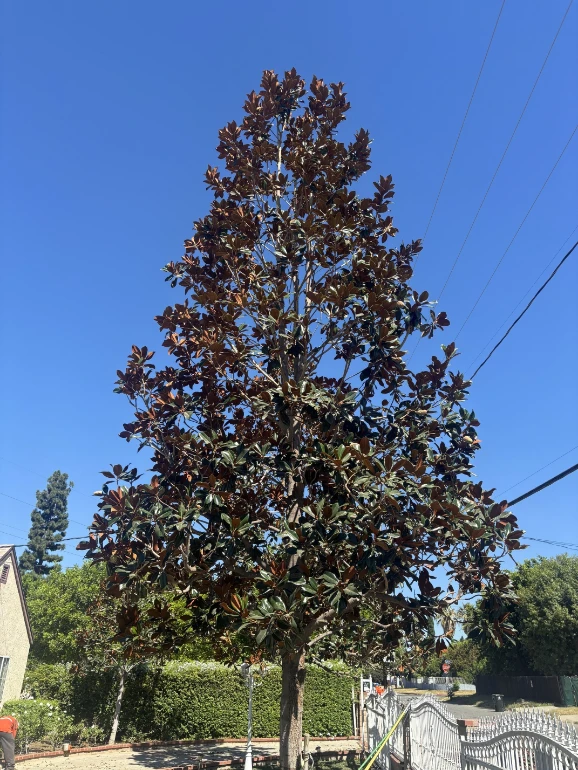
Choose the Outcome Before Choosing the Word
The useful question is not whether you need trimming or pruning. Ask what branch is causing the problem and what should remain afterward.
Walk the property with us. Point out the roof, driveway, dry slope, or weak union causing concern. We will tell you whether tree trimming vs pruning fits the condition. Some trees need a closer assessment first. Contact Dario Tree Trimming while every reasonable option remains available.
